
Experience-Dependent Organization of Cortical Circuits
A central goal of our research is to understand how experience reshapes cortical circuits across the lifespan. We examine how sensory input, environmental conditions, and major life events leave lasting structural signatures in the brain, and how these changes relate to perception and behavior. Our work focuses particularly on the cerebral cortex, where cellular organization can be studied with precise anatomical and functional resolution.
Using quantitative neuroanatomy, fluorescence imaging, behavioral analysis, and longitudinal approaches, we investigate how experience alters the organization of neurons, synapses, inhibitory circuits, and glial cells. These studies aim to identify general principles through which cortical circuits remain adaptable while preserving the stability required for reliable function.
Microglia and Experience-Dependent Remodeling
Microglia continually interact with neurons and synapses and are highly responsive to changes in the internal and external environment. We study how microglial morphology and dynamics change with development, stress, aging, and repeated environmental challenges.
A particular interest is how prior experience influences later microglial responses. By examining both baseline organization and responses to subsequent challenges, we aim to understand whether microglia retain signatures of earlier experience that alter how cortical circuits respond to future events.
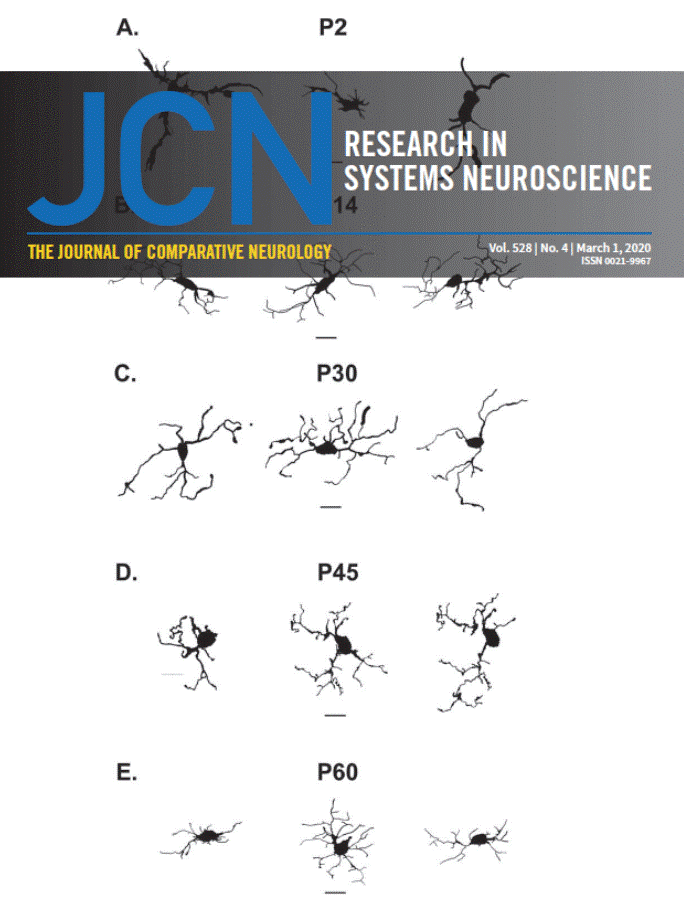
Above: Postnatal Developmental Maturation Trajectory of Microglia (immune cells in the brain).
Aging, Structural Plasticity, and Brain–Behavior Relationships
Aging changes the brain at multiple levels, from dendritic spines and neuronal architecture to microglial morphology and behavioral performance. We are interested in how these changes are coordinated and why structural alterations do not always translate directly into functional decline.
Our recent work examines how aging weakens relationships between cortical cellular architecture and behavior, and whether interventions can restore aspects of structural plasticity. By integrating neuronal, synaptic, glial, and behavioral measurements, we seek to understand how cortical organization changes across aging and what features of that organization remain modifiable.
Early-Life Adversity and Inhibitory Circuit Development
Experiences during early development can shape cortical circuits long after the original experience has ended. We study how early-life adversity influences the maturation and organization of inhibitory networks, with particular attention to parvalbumin-expressing interneurons and perineuronal nets.
The barrel cortex provides a useful model for these studies because its laminar and sensory organization is exceptionally well defined. Our work asks how developmental stress alters inhibitory extracellular matrix architecture across cortical layers, and how these changes may affect the balance between plasticity and stabilization during circuit maturation.

Above: Using dendritic spines as an anatomical proxy of structural plasticity at the synaptic level. A: Golgi-impregnated dendritic segment in a cortical pyramidal neuron (S1 Layer 4 Spiny Stellate Cell, 60X). B: 2D Rendering of the same dendritic segment in A, color codes correspond to different spine morphology indicated in C. C: Quantification of spine categories based on physical length from tip to base of dendritic spine. D: Immunofluorescent staining revealing spine-specific proteins (e.g., spinophillin) colocalized with spine heads (GPF-labeled).
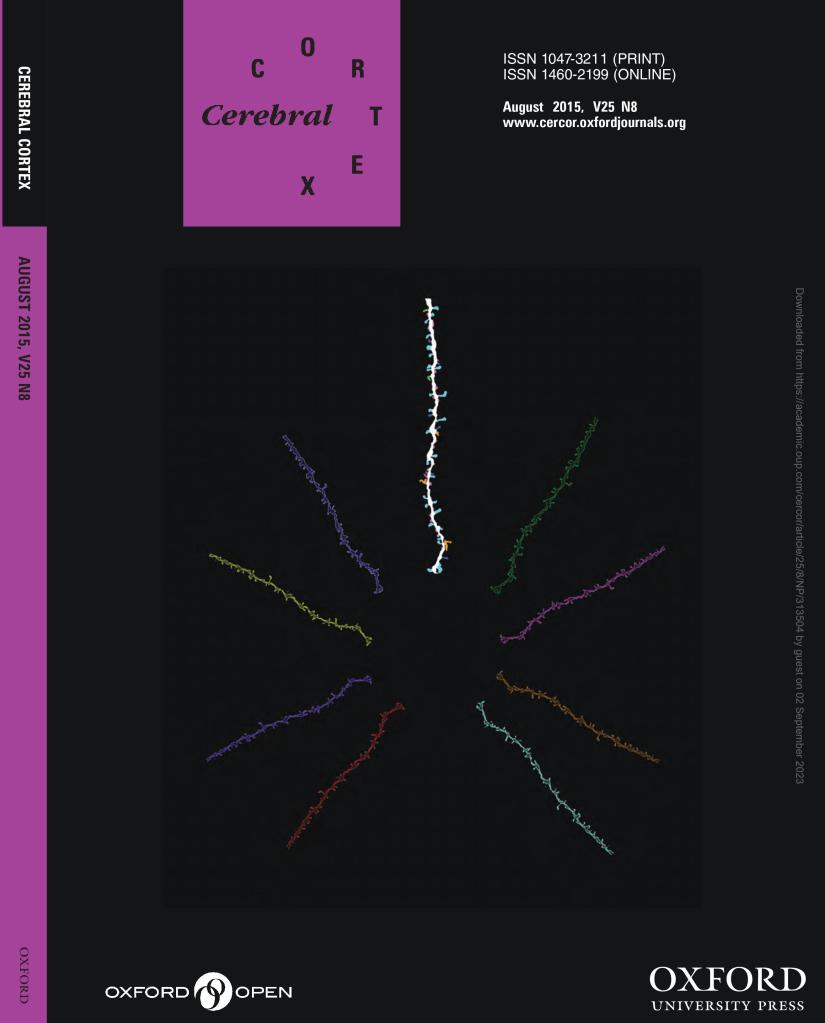
Above: Dendritic segment detailing different morphology of spines. Appeared as cover image at Cerebral Cortex (August 2015). See Chen et al., 2015.
Future Direction: How Experience Becomes Biology
One of the most fundamental questions in neuroscience is how an experience becomes a lasting biological change in the brain. Why do some experiences leave enduring structural traces while others fade? Why can the same challenge produce resilience in one individual and vulnerability in another? And how does the history of a brain influence the way it responds to what happens next?
Our future work will explore how experiences are encoded across multiple levels of cortical organization—from synapses and cellular architecture to glial responses, inhibitory circuits, and behavior. We are particularly interested in how these biological signatures interact over time, how they change across development and aging, and which aspects remain capable of being reshaped.
These questions create opportunities for students with very different interests. A project might begin with an image of a single dendrite, a behavioral observation, a population of microglia, or a computational pattern hidden within anatomical data. Each provides a different entry point into the same larger question: how does the brain carry its history forward, and how does that history shape what it can become?

